
Customized non-standard automation equipment
shuang shuang:+86 139-2296-6949
Customized non-standard automation equipment
shuang shuang:+86 139-2296-6949
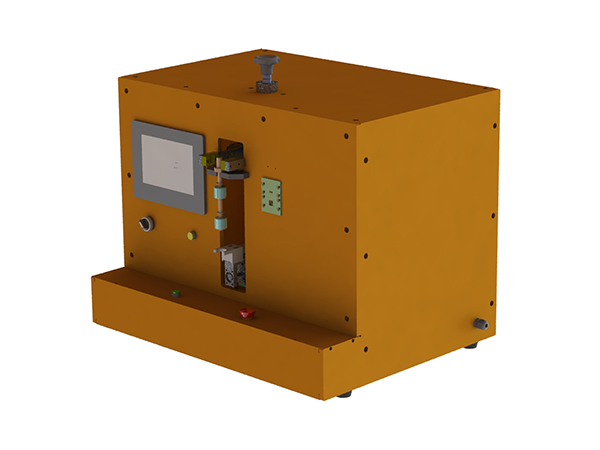
Buoy testing equipment, such as buoy chlorophyll water quality testers and buoy water quality monitoring stations, has been widely adopted in the field of water environment monitoring in recent years. Below is a detailed introduction to buoy testing machines:
I. Working Principle
A buoy testing machine mainly relies on integrated high-precision water quality sensors to detect various water quality indicators accurately. For instance, the chlorophyll sensor adopts laser fluorescence technology: it emits laser beams to excite chlorophyll in water to generate fluorescence signals, so as to measure chlorophyll concentration. The pH sensor works on the electrochemical principle by detecting hydrogen ion concentration to obtain pH values. Dissolved oxygen sensors generally adopt fluorescence or polarographic methods to measure dissolved oxygen content. Data collected by all sensors is transmitted to the data center in real time via wireless communication technologies such as GPRS and 4G for subsequent processing and analysis by supporting software.
II. Main Structural Components
A buoy testing machine consists of a buoy body, sensors, data collector, supporting software and power supply system. The buoy floats stably on water to guarantee accurate test results; sensors serve as core measuring components; the data collector aggregates digital signals transmitted by sensors; the software processes data and outputs final water quality parameters. The power supply system usually combines solar panels and storage batteries to support uninterrupted monitoring.
III. Functional Features
Real-time Monitoring: The machine conducts real-time measurement and transmits data to computers at preset sampling frequencies, allowing staff to quickly judge whether water quality meets standards.
Automatic Testing: Automatic testing technology eliminates manual errors and improves testing efficiency and precision.
High-precision Measurement: Built-in high-precision sensors accurately measure indicators including chlorophyll concentration, pH and dissolved oxygen.
Remote Monitoring & Management: Internet-based remote data acquisition and system control enable managers to view real-time monitoring data and remotely operate and maintain monitoring stations off-site.
Strong Environmental Adaptability: The equipment is designed to withstand harsh weather and complex water flow conditions for stable operation.
IV. Application Scenarios
Buoy testing machines cover a wide range of applications, including but not limited to:
Drinking Water Source Protection: Real-time water quality monitoring to guarantee safe drinking water.
River Water Quality Monitoring: Deployed along rivers to track water quality changes and provide data for river pollution treatment and ecological restoration.
Lake & Reservoir Management: Placed in lakes and reservoirs for short-term or long-term monitoring of eutrophication and algae growth.
Coastal & Marine Environmental Monitoring: Measures seawater temperature, salinity, dissolved oxygen and other indicators, supporting marine ecological protection, fishery management and marine disaster early warning.
Aquaculture Monitoring: Helps breeders track water conditions in breeding ponds and adjust environments timely to raise farming profits.
Emergency Monitoring & Early Warning: Rapid deployment for emergency monitoring and warning after water pollution incidents or natural disasters.
V. Maintenance & Calibration
Regular calibration and maintenance are essential to maintain the accuracy and reliability of buoy testing machines. Calibration frequency is determined by equipment precision requirements, operating environments and data importance, with quarterly calibration recommended. Routine maintenance is suggested monthly according to equipment condition, working environment and failure rate. During maintenance, inspect the equipment appearance, sensor performance and data transmission function to ensure normal operation. Batteries shall be replaced periodically, and the equipment shall be stored in dry, ventilated spaces free of corrosive gas.
In conclusion, as an efficient, accurate and real-time water quality monitoring device, buoy testing machines are playing an increasingly vital role in water environment monitoring. With diverse application scenarios and powerful functions, they have become one of the preferred equipment for water quality monitoring projects.
+86 139-2296-6949
+86 0769-83284178


Dongguan You'an Precision Machinery Co., Ltd. Copyright © 2026 Copyright ©
The web page materials and related resources on this site are all sourced from the Internet. If there is any infringement, please notify us immediately. We will delete them within 24 hours.